

Cost Per Lead: Calculate It and Fix Call Tracking
Learn how to calculate cost per lead accurately and why missing call tracking can make your reported CPL misleading.

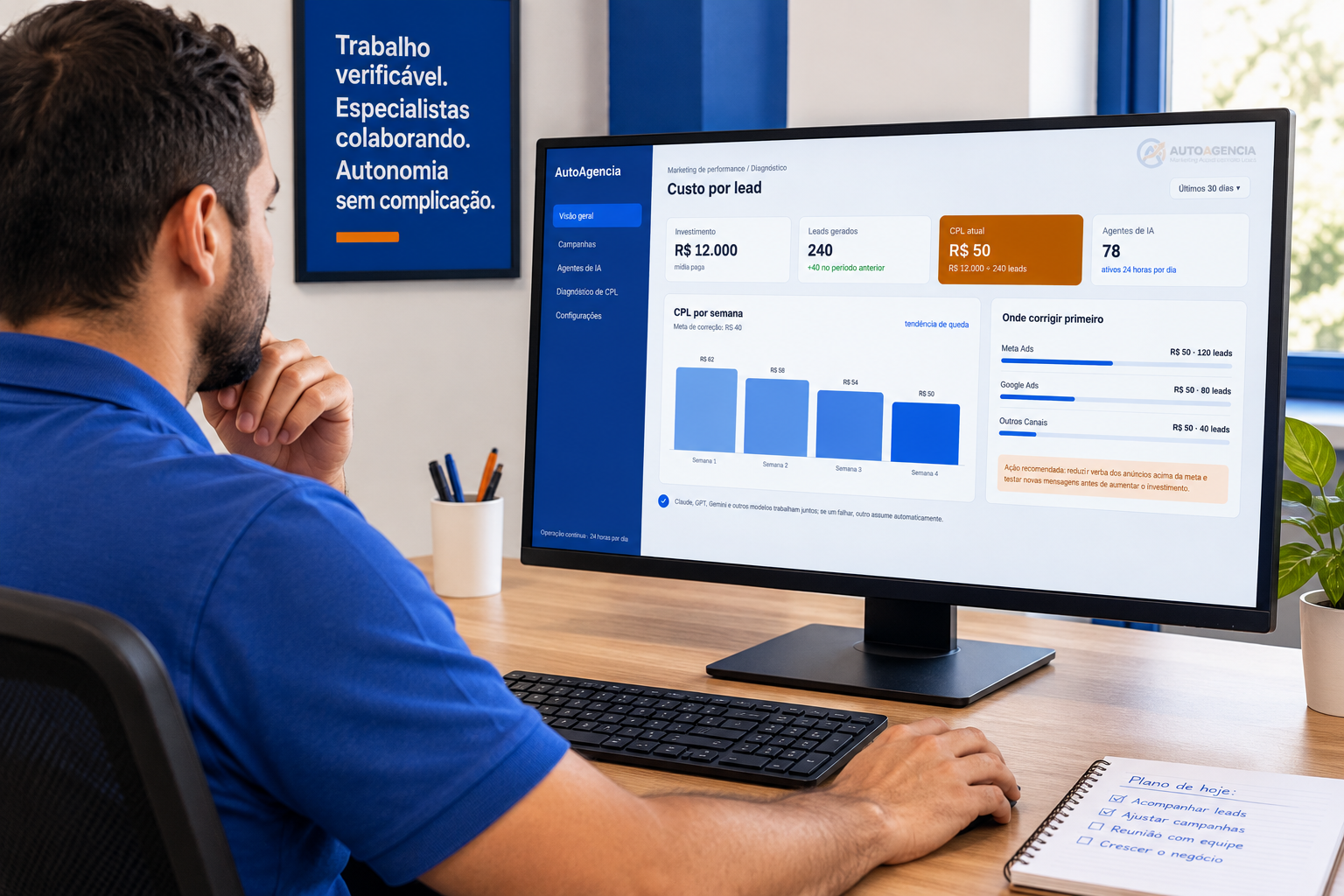
Cost Per Lead: How to Calculate It and Why Call Tracking Changes Everything
Cost per lead is one of the first numbers I look at when reviewing a paid media account. It is useful, familiar, and easy to explain to a client. It is also one of the most commonly misreported metrics in performance marketing.
The problem is not usually the formula. The problem is that the lead count is incomplete. A form submission gets recorded in the ad platform or CRM, while phone calls, booked calls, WhatsApp conversations, and offline sales activity stay outside the report. The agency then celebrates a low cost per lead while the client sees a phone that is not ringing, or worse, a sales team following up on leads that were never real buying opportunities.
I have audited accounts where the reported CPL looked acceptable until we compared it with inbound phone activity. The paid search campaign was generating calls, but because the calls were not tracked, the optimization system treated them as invisible. Budget moved toward cheaper form fills, even though the sales team was closing more callers. That is not an attribution detail. It is a bidding decision based on bad inputs.
This article covers the calculation, how I evaluate an average cost per lead by industry, and the operational fixes I recommend before anyone decides a campaign is underperforming.
How to calculate cost per lead correctly
The basic formula is straightforward:
Cost per lead = total advertising spend ÷ total tracked leads
If a campaign spends $3,000 and produces 60 leads, the cost per lead is $50. A cost per lead calculator uses that same equation. The hard part is defining what qualifies as a lead and making sure every qualifying action reaches the denominator.
For most local businesses and service companies, I do not count every website interaction as a lead. A page view is not a lead. A click on a phone number is not automatically a lead. A completed contact form may be a lead, but only if it is not spam, a job application, or an existing customer trying to reach support.
Before calculating CPL, I define the conversion events in writing. A practical lead definition could include:
- A completed form with valid contact information.
- A phone call that reaches the business and lasts long enough to indicate a genuine inquiry.
- A booked consultation, estimate, demo, or appointment.
- A qualified chat, text, or WhatsApp conversation when that channel is part of the sales process.
The exact standard depends on the business. A franchise network may need one definition for a consumer location and another for franchise development. A B2B agency may count a demo request but exclude a content download. The key is consistency: compare campaigns using the same lead definition, not whatever each advertising platform happens to report.
A worked cost per lead example
Imagine a home services advertiser spends $4,800 in a month across Google Ads and Meta Ads. The reporting initially shows 80 form submissions. The dashboard reports a $60 CPL.
After call tracking is connected, the business identifies 40 paid-media phone calls that meet its agreed qualification threshold. The campaign actually generated 120 trackable leads:
$4,800 ÷ 120 leads = $40 cost per lead.
The spend did not change. The demand did not suddenly improve. The measurement improved. That difference matters because a $40 CPL may support more budget, while a falsely reported $60 CPL may lead a manager to cut a profitable campaign.
| Metric | Forms-only report | Report with qualified calls |
|---|---|---|
| Total ad spend | $4,800 | $4,800 |
| Tracked form submissions | 80 | 80 |
| Qualified phone calls from paid media | 0 | 40 |
| Total leads used in calculation | 80 | 120 |
| Calculated cost per lead | $60 | $40 |
This is why I tell teams not to use a cost per lead calculator until they have agreed on the lead inputs. The calculator is accurate only when the tracking is accurate.
What is a good cost per lead?
A good CPL is not a universal benchmark. Anyone who gives you one number without asking about your offer, sales process, geography, deal value, margins, and lead quality is giving you a shortcut, not a decision-making framework.
The right question is: What can this business afford to pay for a qualified lead and still acquire a customer profitably?
Start from economics rather than a generic benchmark. If a company closes 20% of qualified leads, earns $1,500 in gross profit from the average first sale, and wants to reserve $600 for acquisition, it can pay up to $120 per qualified lead:
$600 allowable acquisition cost × 20% lead-to-customer close rate = $120 allowable CPL.
That calculation is much more useful than hearing that another advertiser in the same industry pays $45. Their market may be less competitive. Their sales team may close at 35%. Their customer lifetime value may be radically different. They may also be counting low-intent conversions that your team would reject.
How to use average cost per lead by industry benchmarks
Average cost per lead by industry data can be useful as a diagnostic reference, but I do not use it as a target without context. Industry reports are often built from different channels, conversion definitions, countries, account sizes, and time periods. One report may count a click-to-call event as a lead; another may count only a submitted form. Comparing those two numbers is not useful.
Instead, I use benchmarks to ask better questions:
- Is our CPL moving sharply away from our own historical baseline?
- Did auction competition, geographic targeting, or conversion tracking change?
- Are we comparing qualified leads with qualified leads?
- Is the cost higher because lead quality improved, or because efficiency actually declined?
For example, legal services, healthcare, insurance, enterprise software, and high-ticket home services often face expensive clicks and high-value customer outcomes. Their acceptable CPL can be far higher than that of a low-ticket ecommerce promotion. But even within one category, intent changes the economics. “Emergency plumber near me” and “how to fix a leaking faucet” should not be expected to produce the same CPL or close rate.
My operating rule is simple: use external benchmarks to identify an outlier, then use your own CRM and call data to decide whether action is needed.
Why your CPL is wrong when calls are not tracked
When calls are missing, your reported CPL is usually inflated because genuine leads are absent from the calculation. But the bigger issue is not the headline number. It is the chain reaction that follows.
The ad platform optimizes for the wrong behavior
Google Ads, Meta, and other platforms can only optimize toward conversions they receive. If forms are tracked but calls are not, automated bidding learns that form submitters are the desired audience. It does not know that some search terms, locations, devices, or ad messages produce valuable phone calls.
That can cause the account to favor lower-intent form traffic over higher-intent callers. The platform is doing exactly what it was instructed to do; the measurement setup gave it incomplete instructions.
Channel comparisons become misleading
Search often drives calls, especially for urgent local services. Social campaigns may generate more form completions or lead ads. If calls are not attributed, social can appear cheaper on CPL even when search produces more revenue. A channel-level decision made from incomplete conversion data can move budget away from the campaign that is actually producing customers.
Sales teams and media teams argue from different numbers
This is a familiar agency problem. The media team says the campaign generated 100 leads. The sales manager says only 55 reached the pipeline. Both may be looking at incomplete systems. A shared definition of qualified lead, paired with call recordings or disposition data where appropriate, turns that argument into an operational review.
For more on the operating approach behind our measurement work, read Carlos de Oliveira’s author profile. You can also review the broader AutoAgency approach to paid media operations.
What to track before trusting your CPL
I recommend setting up a conversion map before changing bids or budgets. At minimum, document every path a prospect can take from ad click to sales conversation.
- Website forms: Track successful submissions, not button clicks. Filter spam and duplicate submissions where possible.
- Phone calls: Use a tracking method that can connect calls to the relevant source, campaign, and landing page. Define a qualification threshold with the client rather than using an arbitrary duration alone.
- Click-to-call actions: Track them as engagement signals, but distinguish them from confirmed connected calls if the business can do so.
- Chat and messaging: Include conversations that the sales team treats as a real inquiry.
- Appointments: Track booked appointments separately from raw inquiries. This gives you a more meaningful secondary metric.
- Offline outcomes: Send qualified-lead, opportunity, and closed-sale feedback back into the reporting workflow when the CRM supports it.
The last step is where mature accounts separate themselves. A cheap lead is not necessarily a good lead. If you can connect campaigns to qualified opportunities and revenue, CPL becomes a useful efficiency metric instead of the final verdict.
A practical CPL review process for agencies and business owners
When I review an account, I do not start by asking whether the cost per lead is high or low. I start with four questions:
- What events are currently counted as leads?
- Which customer contact paths are not being tracked?
- Which counted leads are rejected by sales, and why?
- What happened to qualified leads, appointments, and revenue after the lead was generated?
Then I calculate CPL at more than one level: raw lead, qualified lead, booked appointment, and closed customer when volume allows. Not every business has enough closed-sale volume for campaign-level reporting every week, but every business can improve the quality of its lead definition.
If calls are meaningful to the business and calls are not tracked, assume the current CPL is incomplete. Do not use it to judge channel performance, set automated bidding targets, or evaluate an agency’s work until the gap is fixed.
Cost per lead is valuable because it connects spend to demand. But it only works when “lead” means what the business actually sells to. Track the call, validate the inquiry, compare like with like, and let profitability—not a generic industry number—set the target.