

Call Tracking Software: A Practical Agency Guide
A practical guide to using call tracking software to connect paid traffic, phone lead quality, and revenue decisions.

In this article
- What Call Tracking Software Actually Does
- Why Agencies Need More Than a Call Count
- How I Set Up Call Tracking Without Breaking Attribution
- Choosing the Best Call Tracking Software for Your Operation
- Common Call Tracking Mistakes That Waste Ad Spend
- Turning Call Data Into Better Marketing Decisions
- Build a Call Tracking Process That Your Team Will Use
Call tracking software is one of the fastest ways to find the gap between marketing metrics and revenue reality. I have seen accounts where a campaign looked unprofitable in the ad platform because the conversion happened over the phone, not through a form submission. The media buyer paused the campaign, the business lost qualified leads, and nobody noticed until the sales team mentioned that call volume had dropped.
This is not a small reporting issue. For agencies, freelancers, franchise groups, and local businesses, phone calls can be the highest-intent lead type in the account. A person willing to call usually has a question that cannot wait: availability, pricing, scheduling, insurance coverage, service area, or a problem that needs immediate help.
The mistake I see most often is treating every call as a conversion. A call that rings once, reaches voicemail, or comes from a vendor should not carry the same value as a booked appointment. Good call tracking starts with attribution, but it only becomes useful when the team connects the call to lead quality and revenue.
What Call Tracking Software Actually Does
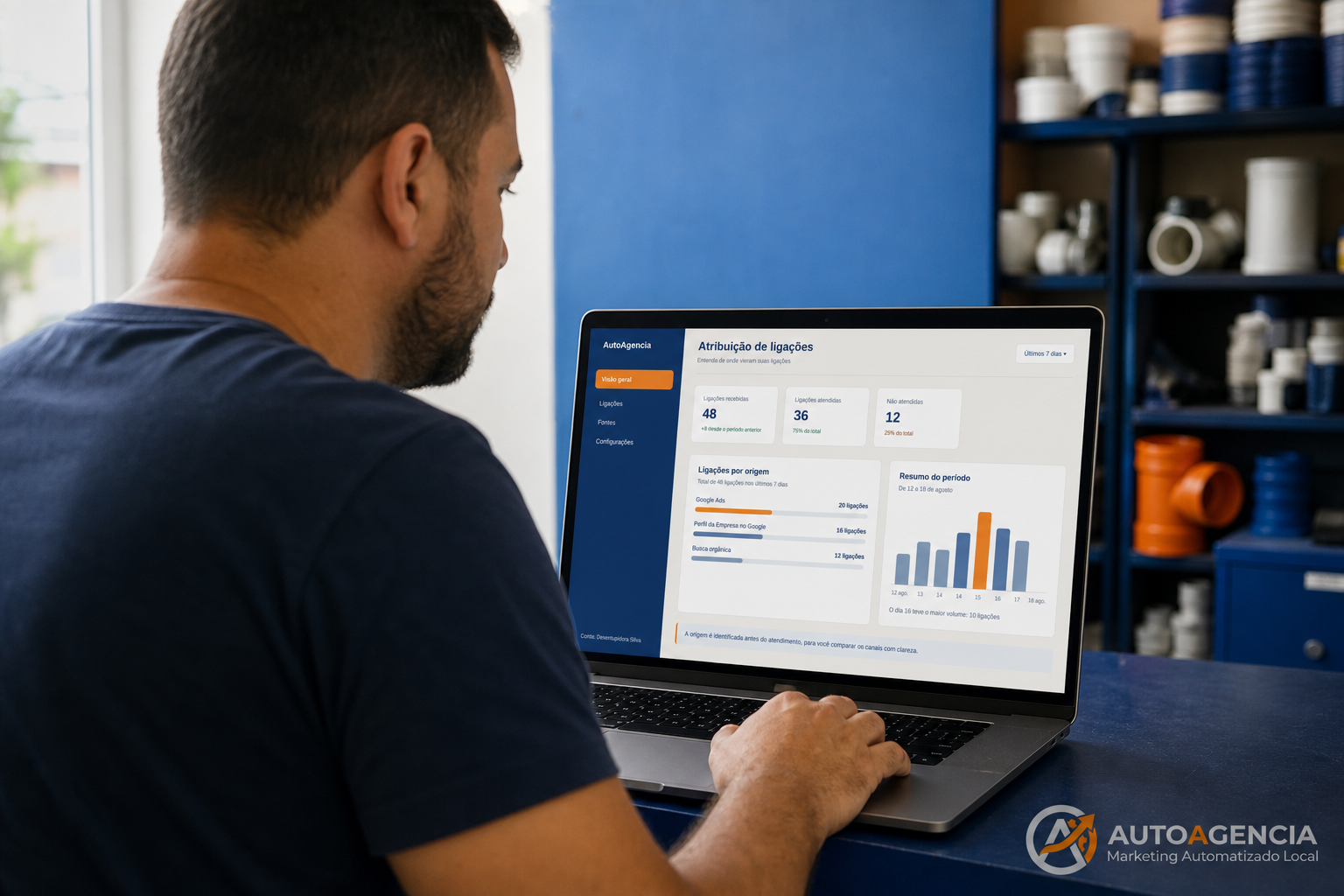
At its core, call tracking software assigns phone numbers to marketing sources so you can identify where a caller came from. Depending on the setup, those sources may include Google Ads, Microsoft Ads, SEO, paid social, direct mail, directories, landing pages, and specific locations.
For most paid traffic accounts, dynamic number insertion is the critical feature. The platform displays a unique tracking number based on the visitor's source, campaign, or session. The business still receives the call on its normal phone line, but the marketing team can see the attribution data that preceded it.
A practical implementation should answer four questions:
- Which channel generated the call?
- Which campaign, keyword, ad group, or landing page influenced it?
- Was the call answered by a real person?
- Did the call become a qualified lead, appointment, estimate, or sale?
If your platform answers only the first two questions, you have attribution data. If it answers all four, you have a system that can improve budget decisions.
Why Agencies Need More Than a Call Count
Raw call volume is easy to report and easy to misunderstand. I would rather see 12 qualified calls that reached the right department than 40 calls that include spam, job seekers, wrong numbers, and abandoned calls.
Here is the operating standard I use when auditing a new account: review a defined sample before making optimization decisions. If call volume is low, I listen to every recorded call that is legally available to review. If volume is high, I use a consistent sample size and a documented qualification rubric. The exact sample size matters less than applying the same rule every month.
That process reveals problems that platform dashboards cannot explain. A campaign may generate calls, but the front desk may be telling callers that no appointments are available. A franchise location may be receiving leads intended for a nearby territory. A strong keyword may be routed to a voicemail box after business hours. None of those issues are fixed by changing a bid.
| Metric | What it tells you | How I use it |
|---|---|---|
| Total tracked calls | Phone response generated by a channel or campaign | Use it as a starting point, not a success metric by itself. |
| Answered call rate | Whether callers reached someone who could help | Investigate routing, staffing, hours, and missed-call handling when this falls. |
| Qualified call rate | Share of calls that match the business's ideal customer criteria | Use it to compare campaigns, locations, and keyword themes. |
| Booked appointment rate | How often qualified callers move to the next sales step | Use it to identify sales-process issues after the marketing handoff. |
| Revenue or closed-sale rate | Whether phone leads create business value | Use it for budget allocation when CRM data is available and reliable. |
How I Set Up Call Tracking Without Breaking Attribution
Start With the Business's Existing Phone Workflow
Before selecting numbers or launching campaigns, map the current phone process. Find out who answers, what happens after hours, how transfers work, whether locations use separate lines, and where appointment or sales data lives. This step is especially important for franchise networks, where a national campaign may feed dozens of local locations with different staffing and service rules.
Do not put a tracking number in place before confirming the destination number. I have seen campaigns send calls to an old office line simply because nobody verified the forwarding path after a location change. The ad account may report conversions while the customer experience is failing in real time.
Use a Number Structure That Matches Reporting Needs
There is no universal number structure. A small business might need one tracking number for Google Ads and another for organic traffic. A multi-location brand may need numbers by location, channel, and campaign. The right decision depends on how granular the reporting must be and whether the business can act on that detail.
My rule is simple: do not create more tracking numbers than the team can maintain and interpret. If nobody will use campaign-level call data, a complex structure adds cost and creates avoidable setup errors. Build enough detail to support decisions, then expand when the reporting process is mature.
Define a Qualified Call Before Launch
Every client needs a written definition of a qualified phone lead. For a home services company, it may be a homeowner in the service area requesting an estimate. For a medical practice, it may be an eligible prospective patient seeking an appointment. For a B2B company, it may be a decision-maker discussing an active need.
Without that definition, account managers and clients will argue about whether the campaigns are working. With it, call reviewers can label outcomes consistently and connect advertising spend to lead quality.
Choosing the Best Call Tracking Software for Your Operation
The best call tracking software is not necessarily the platform with the longest feature list. It is the one that fits the business's routing, reporting, privacy, integration, and review requirements.
When I evaluate a platform, I look for reliable dynamic number insertion, call forwarding controls, source-level attribution, configurable call outcomes, integration options for ad platforms and CRM systems, user permissions, and exportable reporting. For an agency, client access and account separation matter. For a franchise system, location-level routing and governance matter. For a freelancer managing local businesses, setup speed and clear reports may matter more than enterprise features.
I also check how the platform handles recording and transcription. Those tools can be useful for quality assurance, but they create operational responsibilities. Recording laws vary by jurisdiction, and businesses need a process for consent, retention, access, and deletion. Do not assume a software setting solves the legal or policy requirements for your client. Confirm the client's legal guidance and configure the process accordingly.
Common Call Tracking Mistakes That Waste Ad Spend
The first common mistake is importing every call into an ad platform as a primary conversion. This can teach automated bidding to chase low-quality calls. Set a meaningful minimum duration only as an initial filter, then validate it against actual call outcomes. Duration is not qualification. A two-minute call can be a poor fit, and a 45-second call can be a ready-to-book customer.
The second mistake is ignoring missed calls. If paid media produces a valuable lead and the business does not answer, that is not just an operations issue. It is part of the real cost of acquisition. Track missed calls, review the time patterns, and establish a callback process.
The third mistake is separating call data from CRM outcomes. If the business closes deals in a CRM but the agency reports only calls, optimization remains incomplete. Even a simple monthly process that matches qualified calls to booked jobs can make budget conversations much more accurate.
The fourth mistake is relying on call tracking services without ownership of the measurement plan. A vendor can provide technology, but the agency or business still needs to decide what counts as a lead, who reviews outcomes, and how insights change campaigns.
Turning Call Data Into Better Marketing Decisions
Once the tracking foundation is stable, use call data to make decisions at three levels. At the campaign level, compare qualified call rates and downstream outcomes. At the landing-page level, identify pages that generate calls but attract the wrong audience. At the operational level, identify missed-call patterns, routing failures, and sales objections that marketing can address.
For example, if callers repeatedly ask whether a service is available in a specific area, that may indicate that geographic targeting or page copy is too broad. If callers ask for a price range before booking, the business may need clearer qualification language on the landing page. If calls from one campaign are consistently high quality, that campaign deserves more attention than one that merely generates a larger number of short calls.
This is the approach I use at Carlos de Oliveira's author page: treat attribution as an operational tool, not a dashboard decoration. The goal is not to collect more data. The goal is to make the next budget decision with less guesswork.
Build a Call Tracking Process That Your Team Will Use
Call tracking software works when the implementation is simple enough to run every week. Document the number map, conversion definitions, call-review rules, routing owners, and reporting cadence. Make one person accountable for checking whether calls are reaching the right place. Make another person accountable for feeding qualified outcomes back into the marketing review.
If your campaigns generate phone leads and you cannot confidently explain which sources produce qualified opportunities, start there. Our call tracking solution for marketing attribution and lead quality is designed to help agencies and businesses connect phone conversations to the decisions that affect growth.